

Meeting the Mission Where It Already Lives
Extending Commercial Tools for Government Operations: A Case Study of TLEasy
Brought to you by the RealmOne Foundry
There is a growing and deliberate push across the government, particularly within the Intelligence Community, to adopt commercial-off-the-shelf (COTS) software rather than building bespoke capability from scratch. The reasoning is sound: commercial products bring maturity, vendor-sustained innovation, and faster time to impact. That said, adopting COTS is rarely plug-and-play. The gap between what a commercial product does out of the box and what a specific mission requires is where the real integration work begins.
RealmOne sits across a broad spectrum of roles within the IC: software engineers, systems engineers, data scientists, analysts, cybersecurity professionals, reporting specialists, and more. When your people are embedded across the full mission lifecycle, they see the friction points where commercial tools meet operational reality. They understand the products. They understand the missions. They are already present at the intersection where COTS integration creates the most value.
Seeing the Problem: Why Broad Mission Exposure Matters
This project did not originate from a technology roadmap or a vendor pitch. It came from an operator – someone doing the work every day – who flagged that a critical daily task was consuming hours of analyst time for no good reason.
Analysts tracking orbital objects need Two-Line Element (TLE) data, a standardized format for satellite orbit and position information. This data is loaded into Ansys STK for visualization and prediction. The previous process was too manual, and required downloading bulk TLE data from an endpoint, visually parsing through it to locate relevant satellite identifiers, reformatting the data, and ingesting it into STK. This was repeated multiple times per day, across two shifts, consuming four to five hours of experienced analyst time…daily. Our mission-embedded operators saw that what was needed wasn’t new technology or data, but a seamless link between existing tools and workflows.
The Approach: Extend, Don’t Replace
Rather than replacing a known and trusted tool, our goal was to make STK better at what it already does by filling a gap in its workflow. This meant learning the Ansys extensibility architecture and building targeted integrations between existing data feeds and the product.
This effort was taken on by RealmOne’s internal R&D team, the Foundry: a small, agile group that picks up operator-identified problems and quickly develops solutions, drawing on a breadth of technical skills. The team started with a standalone application using STK’s automation API, a pragmatic choice that matched existing team expertise to delivery speed. Over time, the solution evolved into a native plugin running inside STK’s own user interface. That progression, from working alongside the product to working inside it, was deliberate, and reflects a deepening understanding of both the vendor platform and the operational need.
What We Built: Three Phases of Deepening Integration
Phase 1: The MVP
The first version was a lightweight desktop application that could be deployed easily into our customer space. A user enters satellite IDs, whether a single ID, a range, or a specific set, and with one click receives a filtered, formatted TLE file ready for STK ingestion. Even this simple step returned meaningful time savings and, critically, enabled junior analysts to perform a task that previously required senior operators. The MVP was delivered quickly, validated the concept, and built trust with the customer.
Phase 2: Direct Automation
Next, the team extended the application to connect directly to running STK instances through the product’s automation API. TLE data was loaded as satellite profiles into existing scenarios, access calculations ran against predefined ground station locations, and coverage reports were generated automatically, per facility, in the format analysts already expected. This eliminated the remaining manual steps between “I have the data” and “I have actionable predictions.”
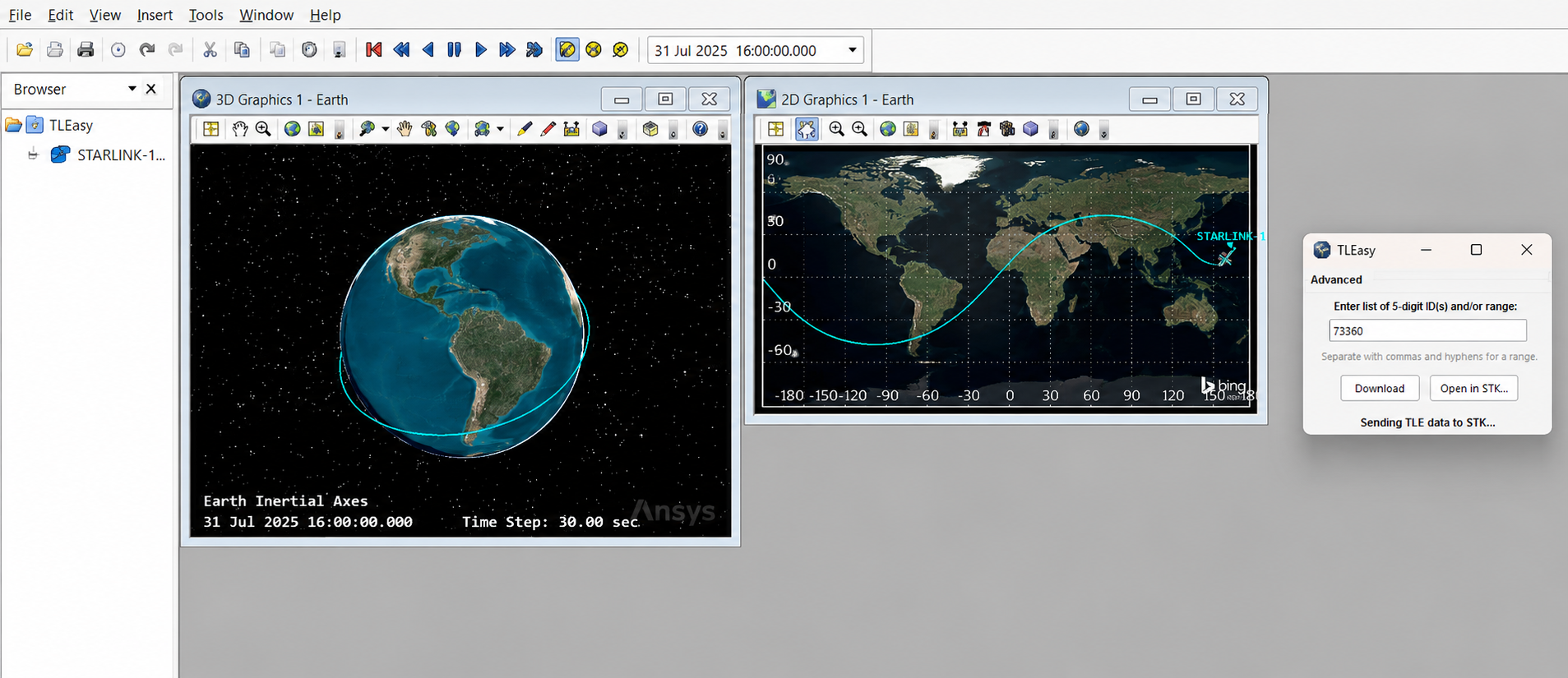
Figure 1 TLEasy Working w/STK
Phase 3: Native Plugin
The final phase rebuilt the capability as a native plugin running inside STK itself, accessible from the toolbar, with configuration in the product’s own settings, autocomplete for satellite searches, color-coded satellite groupings for visual clarity, and intelligent filtering of stale data and out-of-window accesses. From the analyst’s perspective, the capability is now part of their tool. There is no context switching, no separate application, and no extra steps.
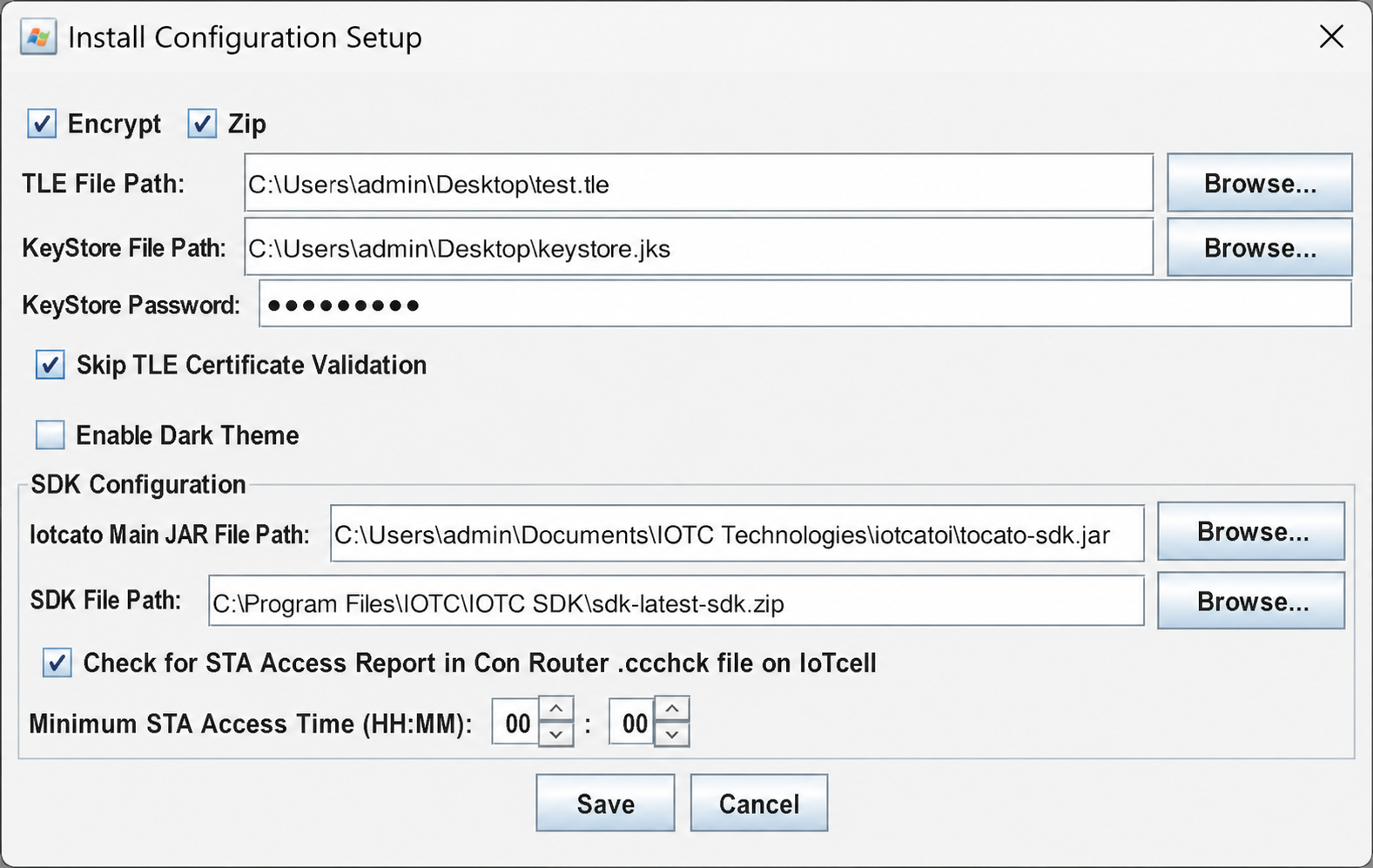
Figure 2 TLEasy Application
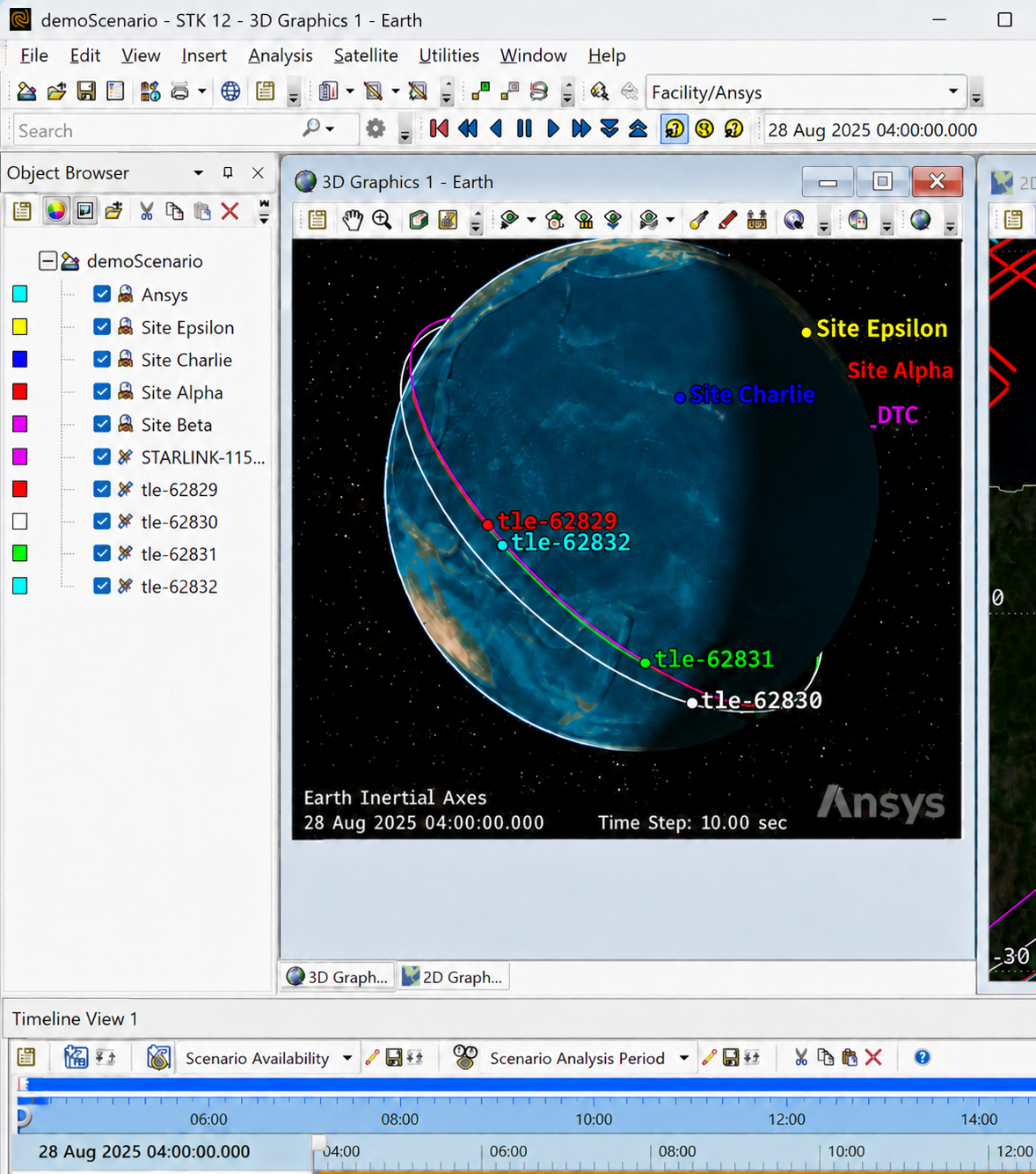
Figure 3 TLEasy within STK
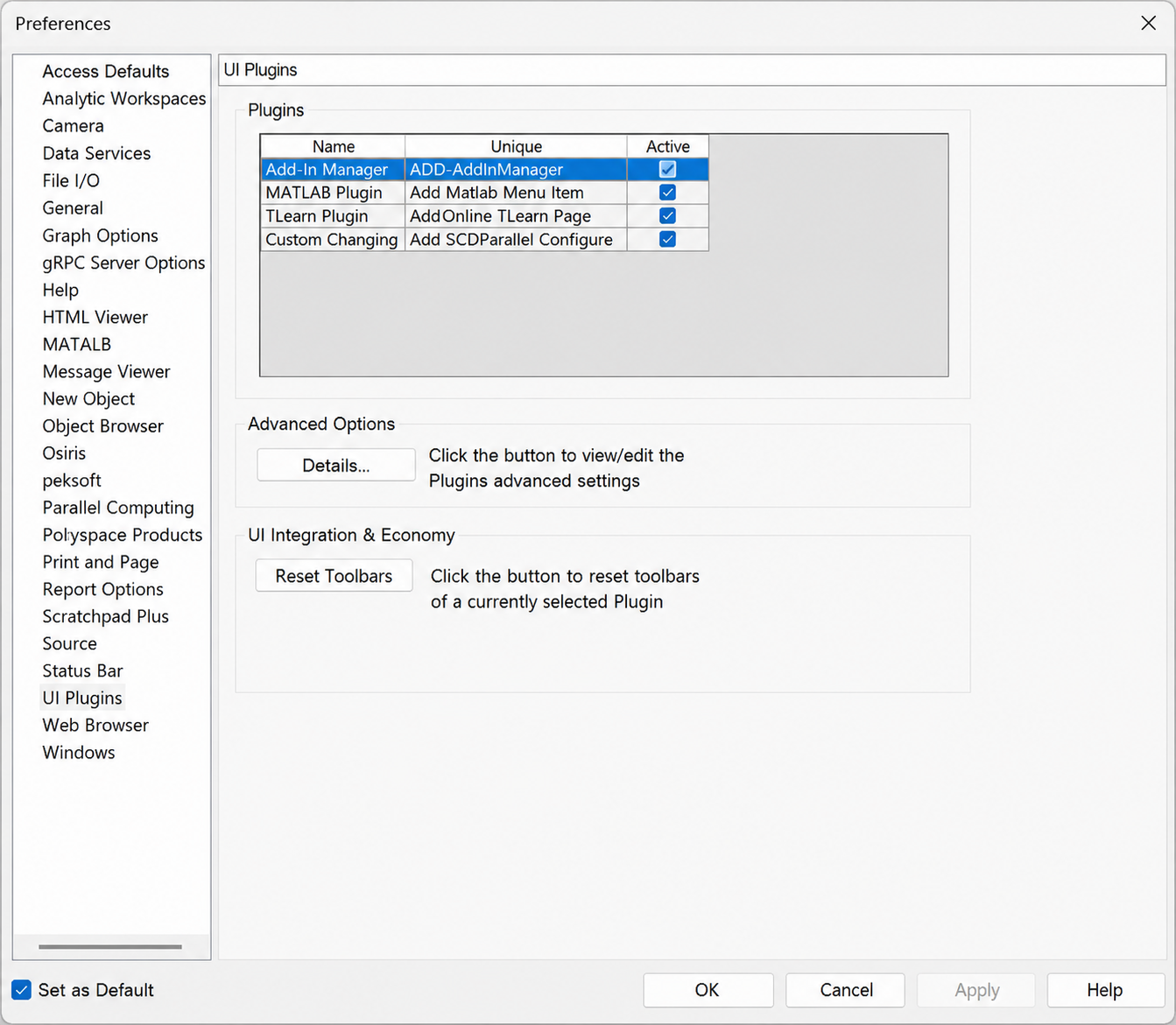
Figure 4 TLEasy Configuration in STK
The Impact: Time Saved, Capability Gained
Analysts reclaimed up to five hours per day, across two shifts. That number continues to grow as the catalog of tracked orbital objects expands because the automated approach scales.
Beyond the raw time savings, the solution also allows junior analysts to handle what previously required experienced operators, freeing senior personnel for higher-order tasks. Automated filtering and validation also reduced human error in a process that was repetitive and manual. And because every new orbital object added to the tracking list increases the delta between the manual and automated approaches, the value of the solution compounds over time without additional development effort.
A Pattern, Not a One-Off
TLEasy is one example, but the pattern is what matters. RealmOne’s broad footprint across IC customers spans engineering, analysis, cyber, data science, and reporting, and means our people are constantly encountering workflow gaps where commercial tools meet operational reality. The same model applies: identify the friction through mission proximity, apply or extend the commercial product, quickly deliver incremental value, and grow the vendor relationship organically.
Other customers have already expressed interest in adopting this capability, and the team is actively exploring replication across additional mission sets. The government ecosystem is full of powerful commercial tools that get eighty percent of the way there. The remaining twenty percent – the integration, automation, and workflow tailoring – is where targeted development creates outsized value. To unlock that crucial twenty percent, you’ve got to be embedded in the mission, and that’s exactly where RealmOne thrives.
Looking Ahead
The best path to modernizing government operations is not always building new tools. Often, it involves improving existing tools work within the operational context. TLEasy started as a small R&D effort sparked by an operator’s frustration with a tedious daily task. It became a native capability inside a major commercial product, reclaimed hundreds of hours of analyst time, enabled a workforce shift toward higher-value work, and seeded a growing vendor partnership.
That is the model: broad mission exposure reveals the opportunity, agile internal R&D acts on it, and vendor partnerships grow from demonstrated value. We’re not just supporting this transformation; we’re leading it. This proven approach has redefined how missions succeed across our portfolio, and we’re only getting started.